

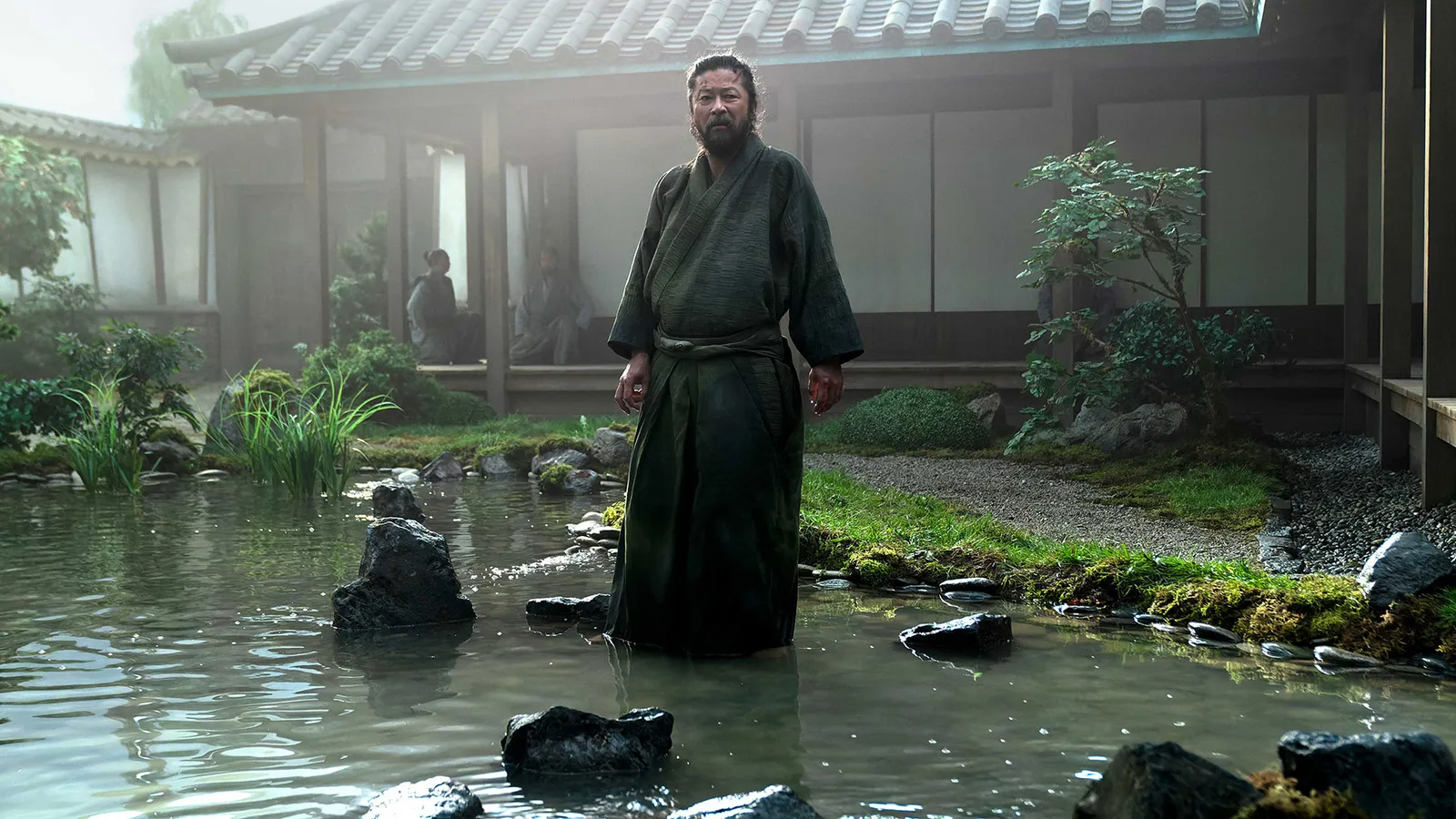

FX’s Shogun, a 10-part epic about the battle for power in feudal Japan, swept the Emmy Awards last month. Facing fierce competition in the Drama category from shows like The Crown and The Morning Show, the series adaptation of James Clavell’s 1975 novel made history by collecting 18 trophies, including Best Actor for Hiroyuki Sanada and Best Actress for Anna Sawai. Amid the celebration of Shogun’s record-breaking achievement, one notable snub went unnoticed: Tadanobu Asano’s loss in the Best Supporting Actor category.
At the ceremony, the 50-year-old actor lost to The Morning Show’s Billy Crudup. This isn’t to discredit Crudup’s stellar performance, but his win comes from a show with uneven writing that—despite its slightly improved third season—often veers into soap opera territory. That’s why Asano’s wonderfully subtle performance being overlooked stings, especially since this may have been his only shot at a nomination, given the narrative arc of his character.
Asano’s portrayal of Kashigi Yabushige, the wily lord who serves under Sanada’s Lord Toranaga, brings unexpected comic relief and rich texture to an otherwise intense show. Yabushige is a slippery opportunist, constantly shifting alliances. If we were to compare Shogun to Game of Thrones—a comparison often made—Yabushige is akin to Littlefinger, constantly keeping everyone on edge. His actions make him a dangerous figure for the protagonists, but Asano’s layered portrayal turns him into a fan favorite.
In Shogun, most characters are stoic, a fitting choice for the setting of Japanese nobility. Their emotions are conveyed through dialogue and controlled movements. Yabushige, however, is one of the few who is allowed more expressive moments on screen. His swagger contrasts sharply with Toranaga’s composed demeanor, and his frequent grunts and disbelieving expressions have even inspired memes and compilation videos. Even when he’s simply in the background, it’s hard not to notice his standout reactions. And he does this without exaggeration—his charisma radiates naturally. That’s the mark of a truly skilled actor.
Yabushige’s dynamic with John Blackthorne (played by Cosmo Jarvis) is a fascinating blend of camaraderie and tension. In the original novel, Yabushige is a more straightforward villain, but the series adds complexity to his character. His inner conflict, torn between selfish ambition and loyalty to others, makes him far more compelling to watch. This duality wouldn’t be as effective without Asano’s nuanced performance. His animated reactions are disarming and often endearing, displaying a surprising degree of sincerity before swiftly turning the tables—or vice versa.
One memorable example comes after Lady Mariko’s death, when a guilt-stricken Yabushige unravels, trying to save himself. The normally cocky lord is reduced to a panicked, quivering mess. On the boat ride to Osaka, Yabushige’s rambling about escaping to England is both chaotic and touching, a mix of desperation and comedic absurdity. Although we’re meant to resent him for his role in Mariko’s death, Asano’s performance elicits a surprising level of sympathy.
By the end of the series, Yabushige remains an unpredictable loose cannon, yet he’s a character viewers can’t help but love. The scene where Toranaga orders him to commit seppuku showcases the character’s shades of gray. Accepting his fate, Yabushige negotiates for a more honorable death and ensures the wellbeing of his nephew, Omi. His final exchange with Toranaga captures their fire-and-ice dynamic, with both actors enhancing each other’s performances. If Sanada is considered the best of the year, Asano should be, too.
But in my opinion, Asano’s most powerful moment comes when Yabushige says goodbye to Omi. True to character, his farewell contains his dry wit, even as the palpable sadness of his impending death hangs over the scene. The dialogue, paired with Omi’s reaction, conveys a mixture of regret and gratitude, showcasing a masterclass in acting and directing.
The thread that runs through Asano’s 10-episode appearance in Shogun is his ability to balance intensity with levity. His role may not have the same narrative weight as Toranaga, Mariko, or Blackthorne, but he adds an essential texture to the story and elevates the performances of those around him—exactly what a supporting role should do.
Moreover, roles like Yabushige’s don’t come around often for Japanese actors. Asano, now 50, is one of the few Japanese actors to regularly appear in American films and television. He’s perhaps best known for playing Hogun in Thor and Thor: The Dark World. He has also starred alongside Sanada in 47 Ronin (2013) and appeared in the video game adaptation Mortal Kombat (2021).

But Asano’s range as an actor goes far beyond these familiar roles. His portrayal of Genghis Khan in Mongol (2007) remains one of his most praised performances, earning him international recognition and proving his ability to take on complex, larger-than-life characters. In Mongol, he didn’t just play a fearsome conqueror; he gave us a deeply humanized version of the legendary figure, blending raw strength with vulnerability in a way that left a lasting impact on audiences worldwide.
Despite such an iconic performance, Asano is often cast in stereotypical roles—fighters, ronin, and samurai. Shogun gave him the opportunity to once again display his full range, bringing nuance, charisma, and unpredictability to the character of Yabushige, which makes his Emmy snub all the more unfortunate.
In an ideal world, Hollywood would recognize Asano’s talent and cast him in more diverse roles. But, as things stand, there are still few opportunities for Asian actors to transcend the limitations of their ethnic identity in Hollywood. Then again, perhaps this is a cynical perspective. Maybe, after Shogun’s landmark success, Hollywood is ready to embrace talents like Asano in roles that go beyond the stereotypical. That’s certainly the hope—because he’s far too good to be confined to the same box.


